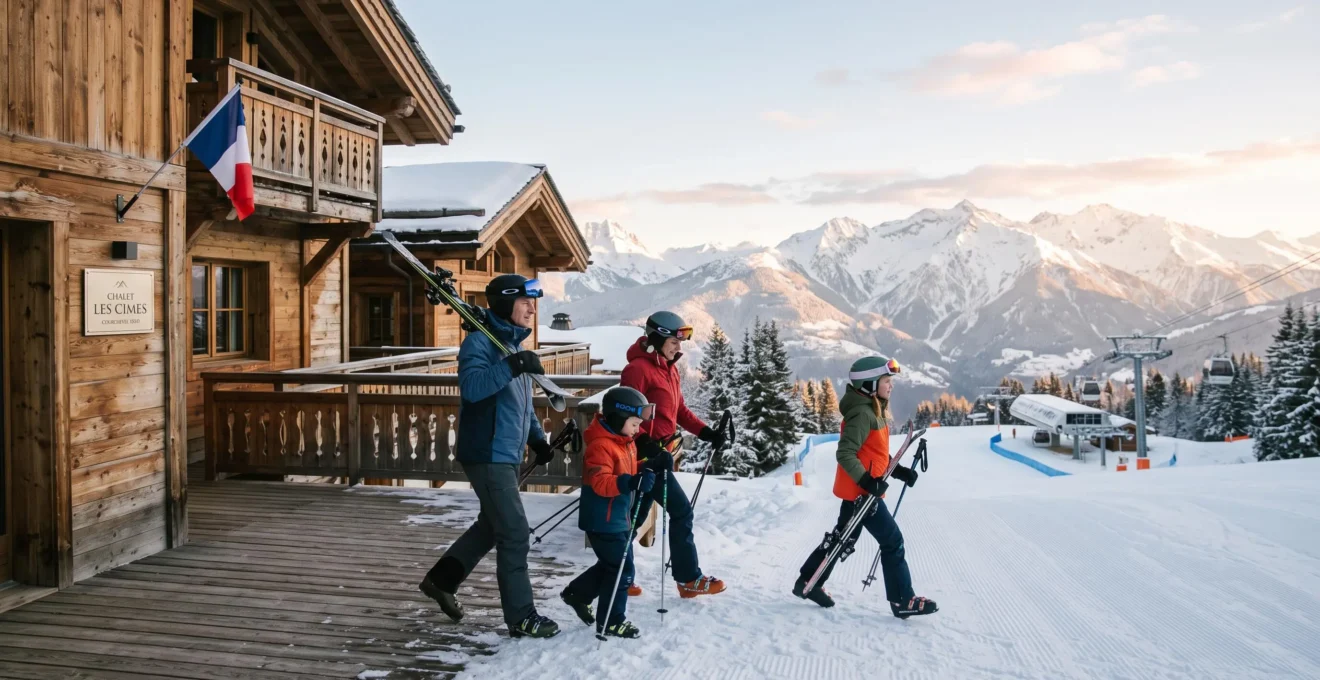
Global industry research from spring 2024 confirms that ski-in ski-out positioning now ranks among the fastest-growing decision factors for discerning skiers booking French Alps properties, alongside accommodation quality and dining options. This shift reflects practical experience: families who’ve navigated morning equipment transport with tired children recognise how metres translate into minutes, and minutes into cumulative frustration or seamless convenience.
The three main Courchevel villages—1550, 1650, and 1850—each present distinct positioning trade-offs between slope access quality, lift proximity, beginner terrain availability, and après-ski atmosphere. Understanding these geographical nuances, paired with concrete criteria for evaluating genuine slope-side claims, allows informed location decisions aligned with your family’s actual skiing profile and holiday priorities.
Authentic ski-in ski-out criteria for Courchevel properties
The term ‘ski-in ski-out’ appears with remarkable frequency across Courchevel rental marketing, yet industry application remains inconsistent. Property listings frequently advertise this designation for accommodations requiring 200+ metre walks to the nearest piste return point—a distance that, when covered in ski boots whilst carrying equipment with two children aged six and nine, consumes 10-15 minutes of your morning routine.
Rental market trends consistently demonstrate that measurable distance criteria provide more reliable evaluation tools than subjective proximity descriptions. Authentic slope-side positioning typically means properties within 50-100 metres of a designated piste access point, where skiers can genuinely clip into bindings within steps of their accommodation terrace. This threshold accounts for the physical reality of walking in ski boots—awkward, slow, and exponentially more taxing when managing children’s equipment alongside your own gear.
Navigating these subtle terminologies requires access to a platform that prioritizes local expertise over generic marketing descriptions. To ensure your accommodation meets the physical requirements of a true mountain experience, you should find your holiday rental on altitude-courchevel.com to benefit from a curated selection of properties. This professional approach allows travelers to filter by precise location metrics, ensuring that the distance between the boot room and the groomed runs aligns with high expectations for comfort and efficiency. By choosing a specialized local partner, international travelers can bypass the ambiguity of broad rental platforms and secure a base that genuinely provides the seamless transition from home to slope.
Your slope-side location priorities in 60 seconds
- Genuine ski-in ski-out means properties within 50-100 metres of direct piste access, not vague marketing ‘proximity’
- Slope-side positioning typically saves 3-4 hours of logistics time over a typical 6-day ski week compared to shuttle-dependent alternatives
- Courchevel 1850 offers the highest concentration of authentic slope-side properties with immediate lift access
- The location premium generally ranges from 30-40% above equivalent village-centre accommodations
- Specialist rental agencies with local Courchevel expertise filter misleading claims to secure genuinely optimal positioning
The most commonly overlooked factor remains terrain gradient between property and slope. A chalet positioned 80 metres from a blue run return might technically qualify as ‘close’, yet if that distance involves navigating a steep footpath or road crossing, the practical accessibility deteriorates significantly. Verify whether the property offers direct snow-to-door access or whether intervening obstacles (roads, steps, non-snow-covered paths) disrupt the seamless transition marketing materials suggest.
Experienced ski property renters typically prioritise visibility of the actual piste from the accommodation—a simple verification method during property viewing or photo review. If you cannot see the ski run or identify the specific lift station name (Bellecôte, Jardin Alpin, Plantret, Grangettes) from the terrace, question whether the access truly merits the ‘ski-in ski-out’ label.
Strategic advantages of slope-side positioning for winter holidays
Quantifying the daily time differential between genuine slope-side properties and shuttle-dependent alternatives reveals why holidaymakers increasingly prioritise location despite premium pricing. A typical morning routine from door to first ski run takes approximately 5 minutes for authentic ski-in ski-out chalets: boot up, step onto terrace, clip in, ski 30 seconds to lift queue. The same sequence for properties requiring shuttle transport or significant walking distance stretches to 25-35 minutes when factoring in gathering equipment, walking to shuttle stop or lift station, and managing children’s pace in rigid boots.
3-4 hours
Typical time saved over a 6-day ski week with genuine slope-side access versus shuttle-dependent property positioning
That 20-30 minute differential compounds across a typical ski week. Six mornings of saved transit time alone yields 2-3 hours. Families with young children often return to the chalet midday for lunch or rest—slope-side properties allow this in minutes, whilst non-proximate accommodations add 20-30 minute round-trips that quickly become logistically prohibitive. Evening après-ski access follows the same pattern: stepping from your chalet into Courchevel’s dining and shopping districts takes minutes from well-positioned 1850 properties, versus the shuttle dependency that constrains spontaneity from more distant locations.
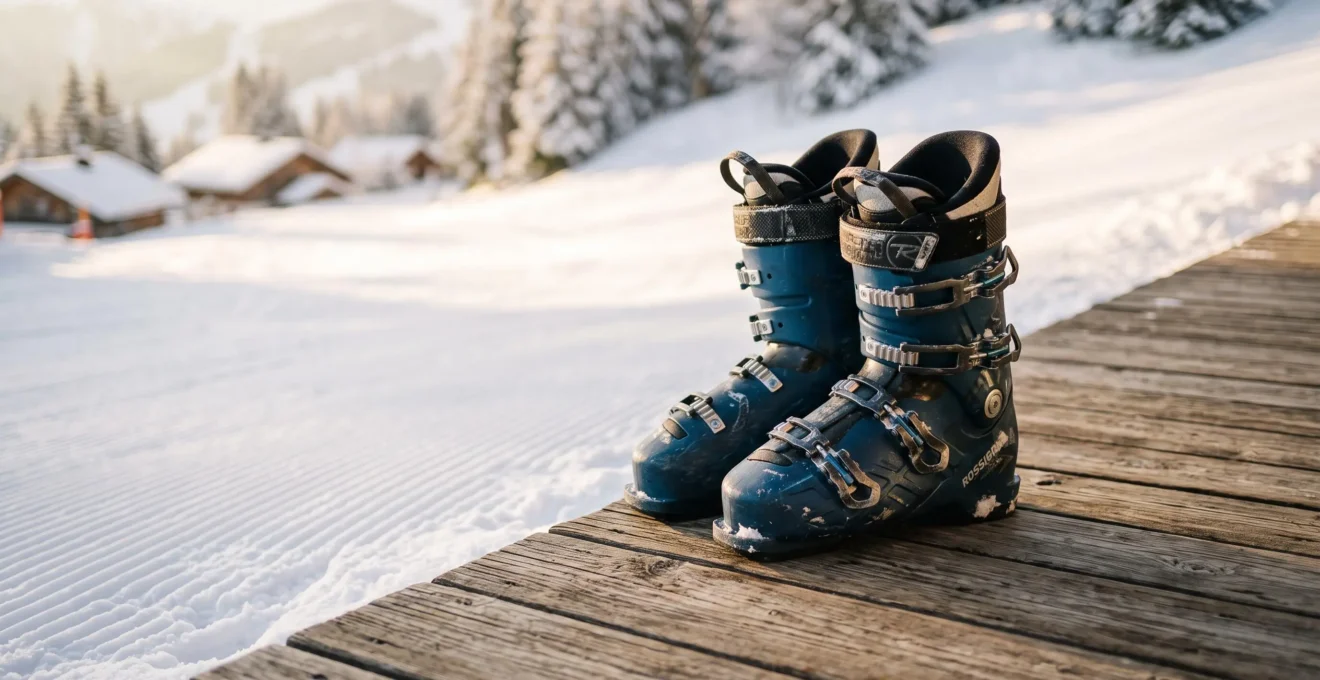
Consider a typical scenario: a family with two children (aged seven and ten, mixed skiing abilities) books a property described as ‘200 metres from Plantret lift’. Each morning, parents carry skis whilst children manage poles and navigate the walk in boots not designed for pavement. The seven-year-old tires quickly, requiring encouragement and slower pace. What property marketing described as ‘a short walk’ becomes a daily 15-minute expedition before skiing even begins. Over six days, that’s 90 minutes spent simply reaching the lift—time subtracted directly from available slope hours.
The location premium for slope-side Courchevel properties generally ranges from 30-40% above equivalent village-centre accommodations. When evaluated against the hours of reclaimed family time, reduced morning stress, and eliminated equipment-carrying logistics, many UK families conclude the differential represents worthwhile value—particularly for shorter breaks where maximising limited ski time becomes critical.
Courchevel’s neighbourhoods decoded: proximity versus prestige
Courchevel’s structure spans five distinct villages according to Les 3 Vallées, though global rental focus concentrates primarily on three main altitude stations. Each presents specific positioning characteristics that affect daily ski logistics, lift access quality, and suitability for different family skiing profiles. The official Les 3 Vallées piste map identifies the precise lift infrastructure serving each sector—critical information when evaluating property claims about ‘immediate lift access’.
The table below compares these three villages across factors rarely detailed in generic destination guides: specific named lifts you’ll actually use, measured walking distances from slope-side properties, and which family skiing profiles each sector genuinely serves best.
| Factor | Courchevel 1550 | Courchevel 1650 (Moriond) | Courchevel 1850 |
|---|---|---|---|
| Primary lift access points | Grangettes sector lifts | Petit Moriond, Ariondaz lifts | Bellecôte, Jardin Alpin, Plantret lifts |
| Typical slope-side property distance | 100-200 metres from lift base | 80-150 metres from piste return | 50-100 metres genuine ski-in ski-out available |
| Best suited for skier profile | Families with young beginners, gentle terrain priority | Mixed-ability families, intermediate focus | Confident intermediates to advanced, prestige seekers |
| Après-ski village atmosphere | Quiet, family-oriented, limited evening options | Moderate buzz, good restaurant selection, less formal than 1850 | Vibrant luxury dining, high-end shopping, sophisticated nightlife |
| Midday return for young children | Straightforward if property near Grangettes | Manageable with proper positioning near Moriond base | Excellent if genuinely slope-side; verify exact piste return point |
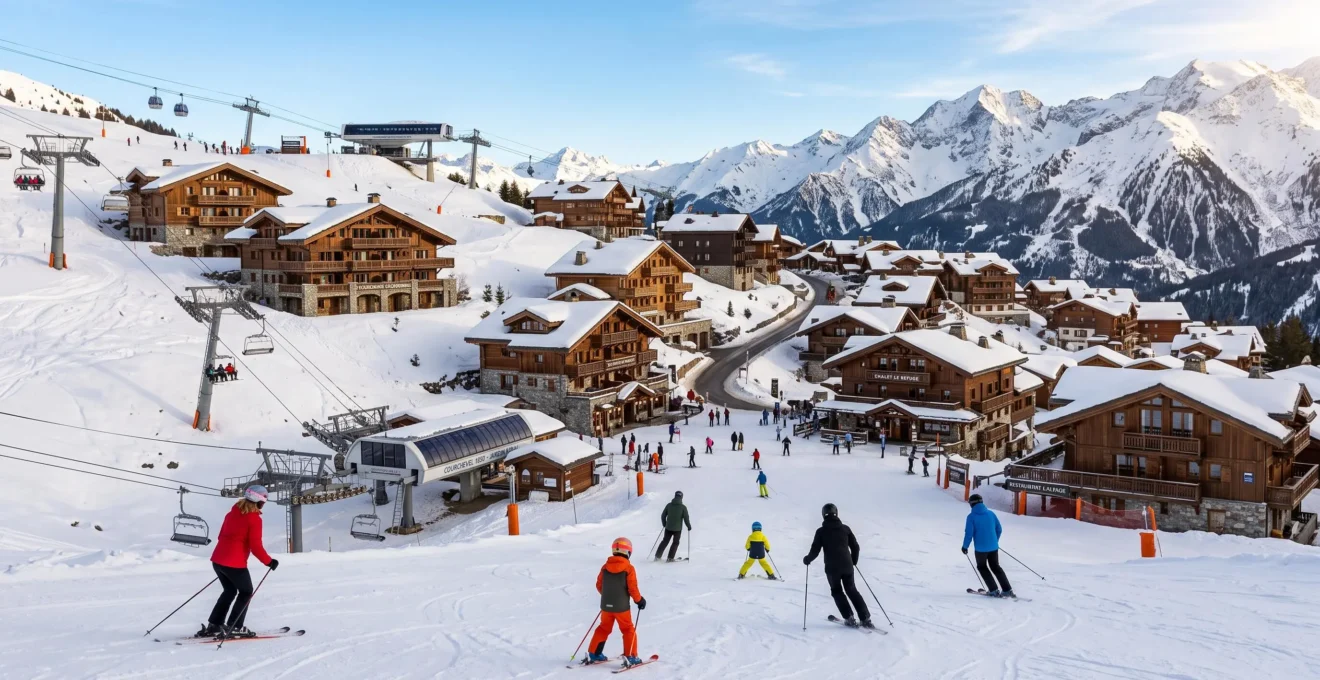
Courchevel 1850 commands the highest rental premiums, yet delivers the greatest concentration of properties offering genuine door-to-slope access. Families prioritising immediate lift proximity and tolerance for premium pricing find this village aligns with those objectives. The Bellecôte and Jardin Alpin lift stations serve extensive intermediate and advanced terrain, though beginners may find themselves shuttling to gentler zones—a consideration if your children are still building confidence.
The lower villages (1550 and 1650) present value-oriented alternatives for families where beginner terrain access outweighs prestige considerations. Properties here rarely achieve the same proximity levels as 1850’s best-positioned chalets, yet the trade-off delivers gentler home runs and reduced pressure on less experienced family members navigating end-of-day returns. Broader assessment principles apply universally, though Courchevel’s specific geography demands attention to named lifts and verified piste return points rather than relying on altitude-based assumptions.
Common questions about location and access in Courchevel
Is the 30-40% premium for slope-side properties genuinely justified?
The premium proves justified when evaluated against time value and friction elimination. Families typically saving 3-4 hours over a ski week gain half a skiing day worth of slope time—time that would otherwise disappear into boot walks, shuttle waits, and equipment transport logistics. For visitors on limited holiday duration (typically one week), that reclaimed time translates directly into skiing experiences or relaxed family moments that justify the differential for many budgets.
What happens if snow conditions affect piste access from my chalet?
Genuine slope-side properties in Courchevel benefit from the resort’s snowmaking infrastructure and piste grooming priorities, which focus on maintaining access routes to accommodation clusters. Properties marketed as ski-in ski-out but positioned on secondary or natural-snow-only routes face higher risk of access disruption during marginal conditions. Official resort infrastructure data from Domaines Skiables de France’s 2024/25 assessment tracks snowmaking capacity across French stations, and specialist rental agencies with detailed Les 3 Vallées operational knowledge can confirm which Courchevel pistes receive priority snow coverage.
Can we rely on resort shuttles as an alternative to slope-side location?
Courchevel’s free shuttle service operates reliably between villages and lift stations, yet introduces fixed schedule constraints and vehicle crowding during peak morning and afternoon periods. Families with young children find the shuttle dependency adds 15-25 minutes to morning routines (gathering at stop, waiting for next service, managing equipment in crowded vehicles) and eliminates the spontaneity of midday returns. Shuttles function adequately as backup transport for evening village access but prove less practical for primary daily ski logistics.
How suitable are non-slope-side properties if some family members don’t ski?
Non-skiing family members often prefer village-centre positioning over isolated slope-side locations, as central properties provide walkable access to shops, spas, and restaurants without requiring skier escorts or shuttle dependency. This creates a genuine trade-off for mixed groups: skiers gain convenience from slope-side positioning whilst non-skiers may feel confined. Some 1850 properties near Bellecôte achieve dual benefits—immediate slope access for skiers and short walks to village amenities—though these represent premium positioning commanding the highest rental rates.
How far in advance must we book to secure genuine ski-in ski-out for February half-term?
Industry observations reveal that authentic slope-side properties in Courchevel book 4-6 months ahead for peak winter holiday dates, with the best-positioned chalets often reserved by returning clients before reaching public market. Data indicates that 71% of high-end skiers now book three months or more in advance, driven partly by awareness that delayed booking restricts location choice. For February half-term 2026, securing optimal positioning requires September-October 2025 action at minimum, ensuring you navigate deposit terms, contract review, and booking confirmation efficiently when prime properties become available.